
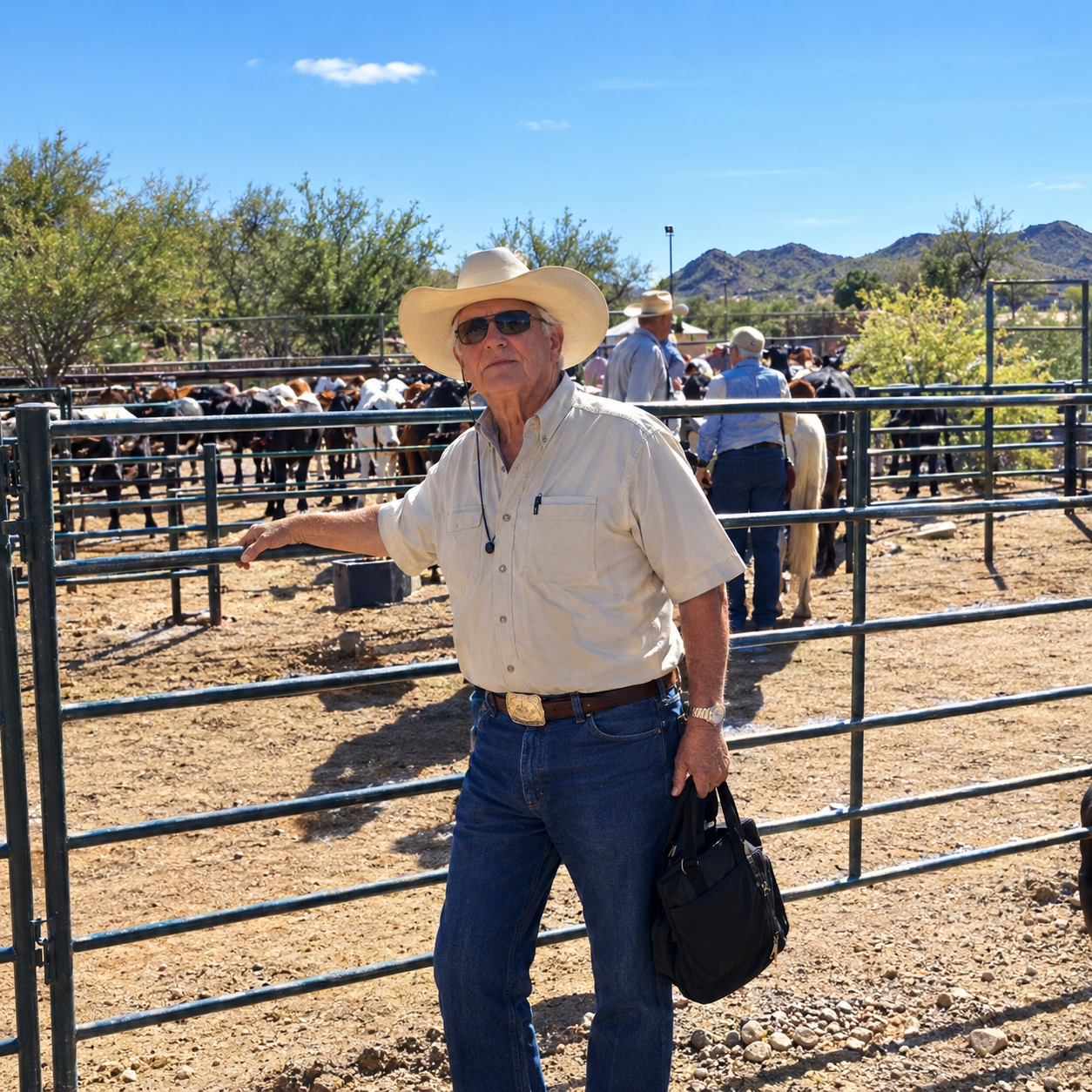
In 1975, Gary McCarthy had what most people would call a good job. He was an economist for the State of Nevada. By his own account it was also boring, and it was not what he wanted to do with his life. He wanted to be a novelist.
He had already been working at it for five years, writing one western a year around his “regular” job. New York publishers were not buying. What he had to show for it was a stack of rejection slips. But McCarthy describes himself as stubborn, and he could see something the rejection letters did not: each novel was better than the last.
A snowy night and an unlikely hero
The turning point came on a snowy winter night, walking out of a local movie theater after seeing Clint Eastwood’s High Plains Drifter. McCarthy was a big Eastwood fan, but he had not particularly liked the film, and it got him thinking. What if he wrote a hero who was the opposite of the usual western stereotype?
The character he imagined was past his prime. He could not shoot. He could not ride a horse. But he was a former bare-knuckle champion and circus strongman.
What if I create a main character that is past his prime, can’t shoot or ride a horse… but he is an ex-bare-knuckles champion and circus strongman?
That idea became The Derby Man, published by Doubleday in 1976. Its hero is a dime novelist who, together with his funny and spirited girlfriend Dolly Beavers, tours the West and writes about the great events of his day. The character became a classic, and McCarthy went on to write six Derby Man novels.
Leaving the steady paycheck behind
After The Derby Man, McCarthy never went back to a steady paying job. He says he has never looked back and wondered whether he should have stayed an economist. Instead, he kept writing westerns, “always enjoying my characters and settings.”
He also took on the challenge of much longer, heavily researched books. He wrote six novels in the Rivers West series and five historical novels in his National Park series. For McCarthy, the formula has stayed the same throughout: great, memorable characters and an exciting story, told with historical accuracy.
Getting the history and the land right
Accuracy, for McCarthy, is not only about dates and events. It is about geography. Getting it right means travelling to remote and usually beautiful places across the West, which he calls “a joy and an adventure.”
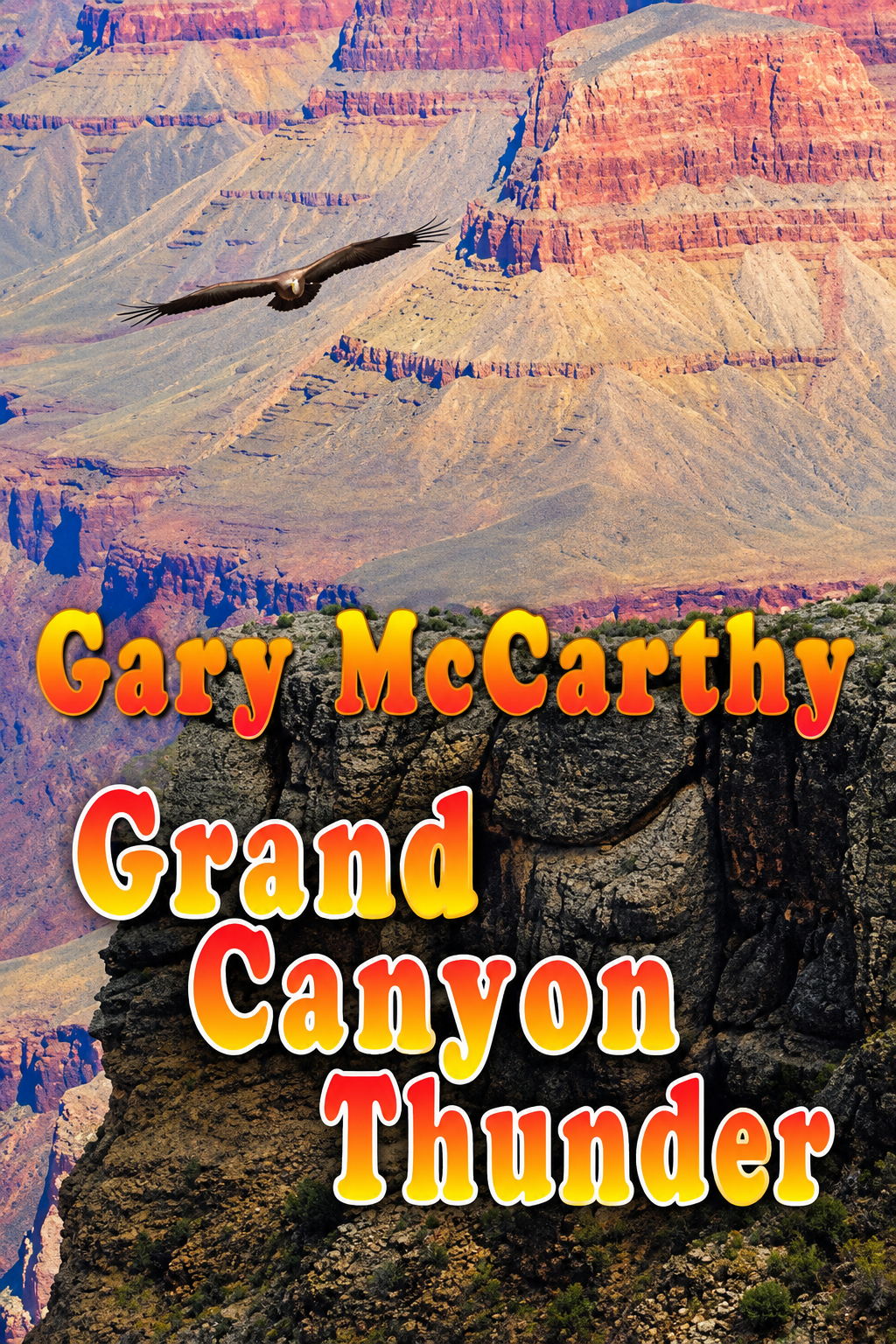
That commitment shows in Grand Canyon Thunder. Its cover captures the setting: an eagle gliding over the canyon’s layered red and violet walls, with a dark rock outcrop in the foreground. It is the kind of landscape McCarthy has spent a career walking, studying, and bringing to life on the page.
A horseman who writes about horsemen
McCarthy’s own background runs through his fiction. He grew up around animals, graduated from Cal Poly with a degree in Animal Science, and is, in his words, “a pretty decent horseman.” That experience guided series such as The Horsemen, where his knowledge of horses gives the stories an authenticity readers can feel.
Two Spurs and a Peacemaker
His work has earned some of the highest honors in western writing. McCarthy has won two Western Writers of America Spur Awards, and in 2019 he received the Western Fictioneers Lifetime Achievement Peacemaker Award, recognizing a career that has helped keep the western alive for new generations of readers.
Looking back, he calls it “a long, interesting trail.” And he still believes in the old saying that sums up both his life and his books:
There’s nothing better for the inside of a man than the outside of a horse.
Find Gary McCarthy’s books
Readers can find Grand Canyon Thunder and Gary McCarthy’s other westerns and historical novels on Amazon.