
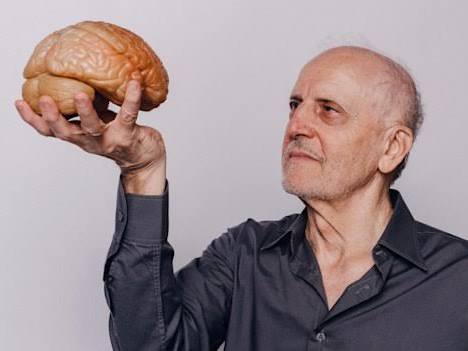
Every map begins with someone willing to go where no one has drawn a line before. For more than half a century, George Paxinos has been that someone, and his territory is the most complex object in the known universe: the brain.
A Scientia Professor at Neuroscience Research Australia (NeuRA) and UNSW Sydney, Paxinos has discovered more brain regions than anyone in history. He has published 58 books. His first, The Rat Brain in Stereotaxic Coordinates, has become the third most cited scientific book of all time. Then, after a 21-year effort, he did something few scientists of his stature ever attempt. He wrote a novel.
Orwellian in its encapsulation of the quintessential moral and social dilemmas of the 21st century, A River Divided shows Paxinos to also be a master storyteller.
The atlas on every neuroscientist’s bench
Walk into almost any neuroscience laboratory in the world and you will find a Paxinos atlas within arm’s reach. Before researchers can study memory, addiction, movement, or disease, they need to know exactly where they are inside the brain. Paxinos gave them the coordinates.
The Rat Brain in Stereotaxic Coordinates turned the brain into navigable terrain, a precise three-dimensional grid that allowed scientists everywhere to target the same structures and compare their findings. It is difficult to overstate its reach. Only two scientific books in history have been cited more often.
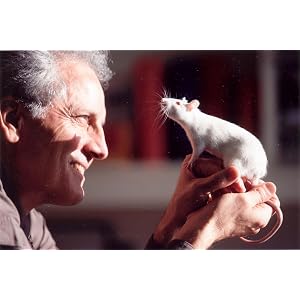
Charting the human brain
From the rat, Paxinos turned to the most important brain of all: our own. His Atlas of the Human Brain has received awards from both the Association of American Publishers and the British Medical Association, recognition that it serves scholars and clinicians alike. Across 58 books, his atlases and reference works span species, developmental stages, and imaging methods, forming one of the most comprehensive bodies of anatomical work ever produced by a single scientist and his collaborators.
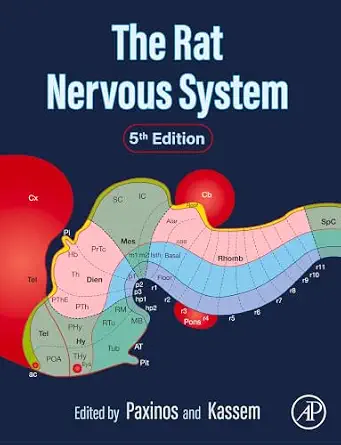
His work continues today. The Rat Nervous System, 5th Edition, edited by Paxinos and Kassem, extends the tradition: a definitive, richly illustrated reference that maps the nervous system from forebrain to spinal cord for a new generation of researchers.
Twenty-one years in the making: A River Divided
For a man who has spent his life describing the brain with absolute precision, fiction might seem a strange new continent. Yet A River Divided is the work of a scientist who never stopped asking the bigger questions: what makes us who we are, what we owe one another, and what happens when knowledge outruns wisdom.
The premise is as bold as any discovery. Cloned ancient genes skip two thousand years to produce identical twins. Raised apart and unaware of each other’s existence, the two are destined to collide in an almighty battle for the Amazon. Nature against nurture, conscience against power, a vanishing world against those who would consume it: Paxinos sets the defining dilemmas of our century against one of the planet’s last great wildernesses.
Cloned ancient genes skip two thousand years to produce identical twins who are raised apart, unaware of the other’s existence, but destined to clash in an almighty battle for the Amazon.
Where science meets story
Readers who know Paxinos only through his atlases will discover a new voice, one that brings the rigor of a scientist and the imagination of a storyteller to questions of genetics, identity, and ethics. The twins at the center of the novel are, in a sense, a thought experiment brought to life, the kind of question a neuroscientist might pose in a lecture hall, here given flesh, history, and consequence.
It is that rare combination, scientific authority married to narrative power, that has drawn comparisons to Orwell. Like the best speculative fiction, A River Divided is not really about the future. It is about us, now.
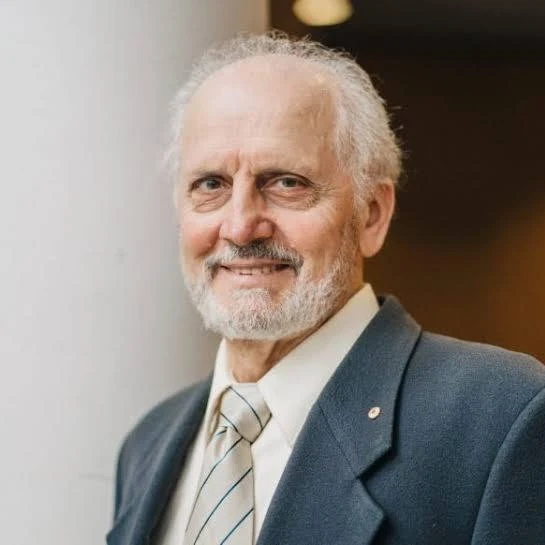
A legacy written in two languages
Science speaks in coordinates; fiction speaks in consequences. George Paxinos has now mastered both. His atlases will continue to guide researchers through the brain for generations. His novel invites everyone else to consider what we will do with what we learn.
For readers who love big ideas, for anyone fascinated by the mind, and for those who want a story that lingers long after the last page, the work of George Paxinos is essential reading.