
Kevin D. Finson spent more than four decades teaching science, from middle school classrooms to the university lecture hall. Now a professor emeritus, he writes illustrated children’s books that began as gifts for his grandchildren, starting with A Cloudy Tale, a story about how to read the sky. We spoke with him about curiosity, accessibility, humor, and the three threads that run through his life’s work.
The Interview · Kevin D. Finson
Kevin D. Finson on Clouds, Curiosity, and Writing Faith for His Grandchildren
The retired science professor talks about A Cloudy Tale, inquiry learning, designing books for children with learning disabilities, his love of puns, and the hope he wants every family to keep.
By DORX Chronicle Editorial Desk
October 8, 2026 · 14 min read
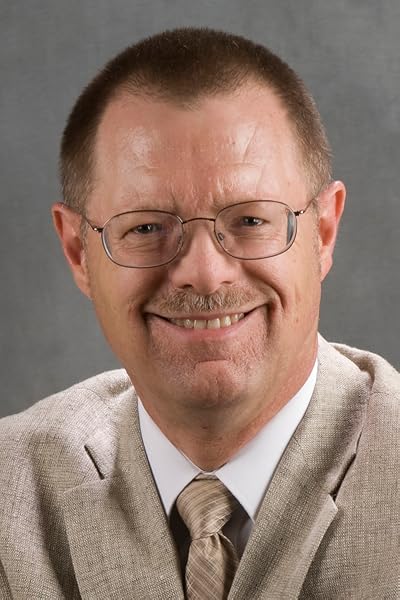
From the classroom to the bedtime story
DORX Chronicle: You spent most of your career teaching science. What inspired you to eventually start writing books for children?
Kevin D. Finson: I began writing books for my grandchildren so I could pass on to them some of my thoughts and perspectives about life. The first book I completed was A Cloudy Tale, and I wrote it to help my grandchildren learn something about clouds and how clouds could provide indicators of what the weather was going to do. These are things I found were taught only peripherally in school, in the rare instances those topics were taught at all.
I wanted to give my grandchildren some insights so they could be wiser about the weather and learn to see it as a part of nature’s cycles. I didn’t want them to fear it, but to understand it better and be able to prepare for it. After A Cloudy Tale, I wanted to do the same kind of thing with faith and moral living, so I started writing the other books. For the most part, each of those books has some connection to experiences my grandchildren have had in their lives, so they can connect to them even if it is at a subconscious level. I eventually decided to share those books with others, hoping my stories would help entertain and educate other children as well as their parents.
Why clouds?
DORX Chronicle: Your first children’s book, A Cloudy Tale, came from your interest in helping children understand thunderstorms. What made you choose clouds and weather as the subject?
Kevin D. Finson: Weather is something each of us experiences every day. It’s a shared, common experience. Whether or not we are aware of it and prepare for it, it affects us all the time, so it is something most of us can relate to and talk about with each other. Clouds are common things to see in the sky. At times they seem mysterious: what kind they are, how they form, how they change and move.
Being able to understand the messages clouds, or the lack of them, are telling us can help us prepare for what is coming. That removes some of the fear of the weather. The early pioneers knew how to watch the sky and interpret what was coming. Much of that has been lost as we have become more modern, and as a culture we have allowed ourselves to rely almost exclusively on what others tell us about the weather. I think we need to relearn how to be somewhat more self-sufficient in that regard.
Besides, it is sometimes fun just to sit and watch the clouds and imagine what shapes we see in them. Watching the clouds can be a peaceful experience as well as an exciting one.
“The early pioneers knew how to watch the sky and interpret what was coming. I think we need to relearn how to be somewhat more self-sufficient in that regard.”
DORX Chronicle: When your grandchildren read an early version of A Cloudy Tale and compared the pictures with the clouds outside their window, what went through your mind?
Kevin D. Finson: I was thrilled that they had read the book and invested themselves in its message so much that they wanted to use it as a guide for their own observations of the weather. I felt good that the book was a success with them and was doing much of what I intended it to do.
Curiosity as a method
DORX Chronicle: You have always been a strong believer in inquiry learning. How do you bring that idea of curiosity and discovery into your children’s books?
Kevin D. Finson: A big part of inquiry is learning to observe phenomena or objects and then being inquisitive enough to want to find out more about them. Inquiry involves curiosity. That is a natural tendency for many children, but it needs to be nurtured in a way that doesn’t seem overly confusing or impossible. Ways to do inquiry well need to be taught, but not in a way where the teacher or parent is the sole source of information.
So with books like A Cloudy Tale, I provide the initial seed that hopefully catches a child’s interest, and from there I sprinkle in a little information throughout that can help him or her seek out more about the phenomenon or object. Children can use those pieces, along with their curiosity, to discover and connect the dots and arrive at understandings that further their knowledge.
Writing for a different reader
DORX Chronicle: After writing academic books and research papers for so many years, what has surprised you most about writing for children?
Kevin D. Finson: In a way it is easier than writing for an academic audience, but at the same time it is more challenging. It is easier in the sense that theoretical frameworks don’t need to be explicitly outlined, and data don’t need to be gathered, put through statistical analyses, and interpreted. It is also shorter.
However, it can be more challenging because you have a very specific point to make by the end, and you have to find the best pathway to get there from the first seed of the idea. It has to be written so it can be understood and internalized by children across a wide variety of cognitive levels, much wider than you would expect of academic readers doing targeted reading in specialized fields. The sentence structure and syntax need to suit the target reading level of the child.
Illustrations add another challenge. Every little detail of an illustration needs to be congruent with what the narrative says, and in a way children can easily take in. How the illustrations are constructed, including the amount of detail and the coloration, matters, because they should support the storyline without becoming a distraction or a disconnected piece of artwork. The artwork needs to be appealing to the eye and invite prolonged attention.
Books every child can read
DORX Chronicle: You have done a lot of work around making science accessible to students with learning disabilities. Has that experience changed the way you think about the books you write?
Kevin D. Finson: To some extent it has. I consider font size, font type, and line spacing, for example. Through my research I found that font sizes of at least 14 and preferably 16 point work best, with half-line spacing between lines and typefaces without serifs, the little curlicues at the ends of letters.
At times it is important to limit the amount of text on a single page and to make sure any connected illustration is on the page directly opposite the text it refers to. I take into account the kinds of colors and how bright they are, so the coloration of the whole piece won’t become a barrier for certain children. I consider word level and sentence syntax, and I avoid hyphenated words.
Perhaps the strongest undercurrent is that I try to write in a way that helps the child form mental images of what is happening in the story, so they can immerse themselves more deeply in it. That means writing in a way that can help a child connect his or her own life experience with what is in the book.
“I try to write in a way that helps the child form mental images of what is happening in the story, so they can immerse themselves more deeply in it.”
Puns, shaggy dogs, and a wet pair of socks
DORX Chronicle: You are also known for your love of puns and shaggy dog stories. How much of that sense of humor finds its way into your writing?
Kevin D. Finson: That depends on the point of the book or story. Sometimes humor would be inappropriate, as in my book The Tree and the Stones, which is about the cedar tree cut down to make the cross on which Christ was crucified.
Sometimes the humor I weave into a story is very subtle. It can emerge if you look closely at how a character reacts to a situation or how a character talks about something. It shows up in very brief moments and never becomes the main focus of the story. Sometimes I take things from my own life that I can now see as funny and put them into a story. An example is in The Lesson of the Sunflowers, when a young man carefully removes his shoes and socks before crossing a shallow creek, then falls flat on his back halfway across and soaks everything anyway.
The people who shaped him
DORX Chronicle: Looking back at your years as a professor, is there a particular student, teacher, or experience that still influences you as a writer today?
Kevin D. Finson: I have had several students who seemed very interested in science but struggled because of factors that had nothing to do with the science concepts or content. They pushed me to find alternative ways to teach science that they could understand. I learned that if information was presented to them in appropriate ways, they could grasp it and make sense of it. I even rewrote sections of a couple of textbooks just for them (nothing publishable, though!). I restructured the ways they could actually do science in my classrooms, giving them choices and some flexibility so they could meet their own needs more effectively. Some of those techniques and strategies apply to the way I might structure a children’s book.
I had two teachers in particular who greatly influenced me. One was my fifth-grade teacher, Mrs. McCain, who challenged me but was wonderfully supportive of what I tried to do. She was the first person to accept and read a short book I wrote and encourage me to keep at it. She told me she would like to see my first real book, but by the time I wrote it she had passed away. The other was one of my college professors, Dr. Robert James, who instilled in me the understanding and knowledge of inquiry science learning and instruction.
I have had many life experiences that influence what I write for children, and I have worked tidbits of them into my stories as things characters do. I think details like that make a story more realistic and relatable to readers’ own lives. Much of it has a faith-based focus, though some is science-based or rooted in family history.
“She told me she would like to see my first real book, but by the time I wrote it she had passed away.”
What comes next
DORX Chronicle: You have several other children’s books in development. What kinds of stories or ideas are you most excited to explore next?
Kevin D. Finson: I have one book project in the hands of a graphic artist. The story is finished, but the illustrations are not, and frankly they are well overdue. I might decide to take on the illustrations myself soon, even though I have already paid the artist.
I have another book idea in mind about a healer who seems able to heal anything under the sun. It would be told from the perspective of someone traveling from village to village who keeps discovering that the healer has gone before him and done miraculous things. Like most of my other children’s books, it will be faith-based.
I also have three books completed and published, with more in progress, that collect the letters I have written to each of my grandchildren. I send each of them a letter every month on the day of the month they were born. A letter might discuss something about science, a personal relationship or family history, or an educational experience I’ve had, and how that relates to growth in faith and moral living.
And I am in the middle stages of writing a book about scientific inquiry. The skeletal framework is done, and I have a co-author who will work on some chapters and address issues we have both identified as important for the first draft. That book is designed for science teachers as well as college faculty who teach pre-service and in-service teachers.
What he hopes families keep
DORX Chronicle: After such a long career in education, research, and publishing, what do you hope children and families will remember or take away from your books?
Kevin D. Finson: I hope they remember the feeling of hope and growth in faith they can get from my books. They may not remember the exact wording, but I hope they internalize and remember the feelings they had reading them. I hope they remember that no one of them is insignificant, and that even the smallest act can make an amazing difference to someone else. I hope they remember the moral values my writing teaches. And I hope they come away with the idea that science, or really any subject, can be accessible to anyone learning it if it is presented in an appropriate way, if we but choose to do it.
Looking at my life journey so far, if there is a central theme, it is helping other people in some way that fits my strengths and personality. There are perhaps three core aspects to this, not in any particular order.
First, I have always wanted to help people learn about science and the scientific process, or enterprise as some would say, and understand how it applies to their daily life and well-being. That includes not only students but academic colleagues. I want to mentor them and be mentored by them. It is a two-way street for a healthy life.
Second, I have always had a deep and abiding faith in the Holy Trinity and have tried to help others as the Holy Trinity teaches us. I have served in my churches and communities, trying to give the best of myself, while recognizing I sometimes fall short, but always intending to help others see the goodness in life and, I hope, draw closer to God.
Third, I have a deep love and devotion to my family. I want to help them understand their faith, what the elements of a moral life are, and how to live that way. I want them to reach those understandings through my stories as well as their own life experiences, and I want to learn from them. I want the love between us to be the glue that binds us together through good times and bad.
All three are the life stories we can share with each other, whether through books or other means, enriching our lives as nothing else can.
“I hope they remember that no one of them is insignificant, and that even the smallest act can make an amazing difference to someone else.”
Where to find his books
DORX Chronicle: Tell our readers where they can find your books.
Kevin D. Finson: My books are available through several outlets, including Amazon, IngramSpark, and Barnes & Noble, among others. Each book is listed on my author webpage with its cover, a brief description, and links to Amazon and/or IngramSpark. My webpage is kevindfinsonauthorspage.org.
Kevin D. Finson’s books can be found on Amazon and through his author website, kevindfinsonauthorspage.org.
Official Author Credential
DORX ChronicleVerified Author
Kevin D. Finson
Professor Emeritus of Science Education · Children’s Author
Scan to buy on Amazon
Point your phone camera at the code to go straight to Kevin D. Finson's book on Amazon.
View on Amazonkevindfinsonauthorspage.org- Credential ID
- DXC-AU-1026-KF
- Verified
- October 8, 2026
- interview
- children’s books
- science education
- faith
Comments
No comments yet — start the conversation.